


The lost twentieth anniversary
In November, 1918 vilgelmovsky Germany failed, and its armies in the West laid down arms. Thanks to it the third anniversary of the occupational mode of Kobrin district stopped. All these years German soldatnya was engaged in a systematic robbery of the occupied territory, sending to near East Prussia infinite echelons with everything that gave in to export, since food, forest products and finishing the burned brick from the sorted houses. Evacuation of haughty conquerors was so hasty that resembled panic flight. The interregnum formed after leaving of Germans was used by petlyurovets who during that time were only in the slightest degree organized force in these parts. However, already in the second half of 1919 petlyurovets were forced out by the Polish military formations of Pilsudsky.

Here it is pertinent to remember that in August, 1915 at approach of the front the vast majority kobrinchan was evacuated far inland, on a long row of years having appeared on position of homeless "refugees". On familiar spots there were only residents of villages, more remote from a front line, Jewish citizens whom the bitter destiny of exile did not concern.
The first shy groups of refugees, are stronger than others ached with nostalgia, already in 1918-19gg. did attempts to come back to the native land. Persistently overcoming the incredible barriers connected with risk for life that was not surprising when around stormed splice civil war, the people completely stunned with the events went from closer places on the horses who are taken out from the homeland. Brought to more remote provinces were evacuated later when there began work the organization of Plenbezh.
With its assistance in chock-full commodity cars in east direction echelons with the released prisoners of war, and in western – with refugees moved. This organized transfer of multimillion human masses lasted for a row of years and came to the end only in 1923.
As the first meeting with a new order and original purgatory for the repatriates going to the western Belarus served the huge camp on the suburb of Baranovichi. For this purpose the Polish administration used numerous barracks of the former camp for prisoners of war. Here arrived were exposed to the sanitary quarantine accompanied with careful interrogation most of suspects. The armed security guards at any case let know to "chubarika" that "here not Bolsheviya, and a panstvo Polsk" in which the strong discipline and an order dominates. This truth was inspired in the quailed people who were not knowing Polish not only by terrible hails, but also with assistance of more intelligible argument – a rubber bludgeon.
Only after three-week stay in incredible dense barracks ex-refugees could go to permanent residences. There completely become puzzled people instead of habitual counties and provinces found is never alien sounding "poveta" of unknown voivodeships earlier – Polesia, Novogrudsky, Belostoksky, Vilensky …
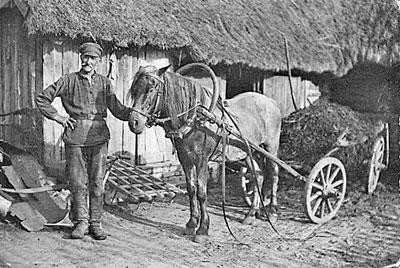 And native places, so tempting on memoirs, pretty often met the come-back owners by traces of the burned-down huts which grew with a tall weeds and young growths of young birches and an alder thicket on the thrown strips of earlier arable fields. It was necessary to lodge in hastily the dug dugouts, to drag years in unimaginably primitive conditions that with the huge tension of all forces to restore from scratch economy, in passing getting used to alien orders. This extremely difficult period for many families took the whole decade. The West Belarusian and West Ukrainian lands which appeared will of historical destinies in borders of bourgeois-capitalistic Poland received the official name "Kresa to the vskhoyena" - East suburbs. From the very beginning the authorities divided the Polish-Lithuanian Commonwealth into Poland-and and Poland-B. And Kresa completely were a part of the Poland B which intended to serve as the raw-material producing supplier to industrial and industrial Poland-and. Proceeding from such prerequisites, by drawing up any development plans and distributions of public funds at most of attention and privileges it was steadily given to a letter "A" in damage of a letter "B". Besides, on "Kresakh" in general construction of the large industrial enterprises was forbidden.
Quite naturally at such state of affairs that the considered two decades of history of Kobrin without the slightest exaggeration should be defined extremely laconically: comprehensive stagnation. And this process concerned resolutely all aspects of national life, since amazing stability of urban population which number fluctuated within eleven thousand. And it when from the overpopulated central and western voivodeships to Kobrin district the kind one hundred Polish families annually moved. Thanks to it the number of the Polish population which according to 19 Art. did not make in the Kobrin County and one percent whereas in the late thirties 5-7% reached steadily increased. However, official data are extremely contradictory and are hardly plausible.
At the same time local aboriginals oppressed by chronic unemployment and the total hopelessness continuously in large quantities left where it was only possible. Originally the wave of emigration went to the USA and Canada. When borders of these countries were tightly closed, the flow of emigrants switched to more available countries of South America – Argentina, Paraguay, Uruguay, Brazil.
Further spatial growth of the city also almost completely stopped. It is enough to tell that only on the northern suburb of a suburban manor the Province (nowadays park of Suvorov) belonging to the Polish landowner arose and two new streets – Klopotsin (Pioneer) and Kvyatova (Zhdanov) began to be built up extremely inertly. Here officials with decent salaries lodged mainly. Zelinsky received one for one square meter of the earth zlot. For comparison we will specify that average earnings of the time-worker did not exceed 1,5 – 2 zl., and the cow cost 80 - 100 zl.
As for the buildings of public use built for the twentieth anniversary in Kobrin, they, literally, can be listed on fingers of one hand. Individual construction was also conducted in extremely insignificant scales. In the 20th years in the city the power plant appeared low-power (180 kW). However, the poorest part of the population owing to high cost of the electric power was still content with more available kerosene for lighting. At the end of Proletarskaya St. Gurvich's timber mill with 50 workers was constructed. Up to 1939 this plant remained the most considerable industrial enterprise of the city.
According to official figures the Kobrin seymik (zemstvo), the provided in Józef Yakubovsky's book "A public and cultural condition of villages of the Kobrin povet", major activity of 85% of the population was agriculture. The total of farms made 11294, including landowner (over 100 hectares of the earth) 153. In the county, besides the city, there were 19500 houses whereas the average number of inhabitants of one settlement did not exceed 125 people. 51% of farmers owned less than 5 hectares which haying grounds and a bog entered. These already low-power farms continued to be split up further continuously owing to family sections. Negatively the strip farming influenced. In vessels the stream of the processes ruining the parties "because of a boundary" did not stop.
Data on productivity of the main crops with 1 hectare in 1932 are of undoubted interest. Rye – 7, wheat – 6, barley and oats – 8, potatoes – 74 centners. Chemical fertilizers were almost not applied owing to high cost. And it was not enough organic fertilizers if to consider that it was the share of 100 hectares of arable grounds pets (for comparison two figures, the first – average for all Poland, the second – for Kobrin district are given): horses 15,9-7,9, cattle 38,1-28,3, pigs 23,6-14,0.
As prices of corn and potatoes were extremely low, their sale caused difficulties. Therefore in the 30th it became more increasing longer and longer attention to be paid to pig-breeding. Monthly in the city three livestock fairs at which the Warsaw merchants bought on some cars of pigs were held. More initiative and wealthy owners were engaged in cultivation of racial horses. They at high prices were bought not only for the Polish cavalry, there came also remonter from Greece and Romania.
Straw cutters, winnowers and manual threshers acquired usually by sharing the cost were the most widespread agricultural cars. However mainly for crops immemorial bast baskets, for cleaning – a braid yes a sickle, for a threshing - wooden tsep served, in the course there were still "fashionable" millstones.
From the middle of the 30th of the power began to spread strenuously in villages so-called "komasation", to revive farm system. If farm were favorable to more well-founded part of the peasantry which with approval met this innovation, then land-poor masses, realizing negative consequences of a komasation for poor man's farms, desperately protested and showed all resistance. Besides economic reasons, the farm system was thought of the government as reliable dissociation of rural collective, strengthening of proprietary individualism for the purpose of counteraction of unity in revolutionary fight which more and more widely covered a people at large.
It should be noted undoubtedly progressive influence of mass "fleeing" on the subsequent development of our village. The most backward poleshuk which visited various corners of Russia even adopted a lot of useful to themselves. It affected also in life, in distribution of new crops, on country personal plots orchards which were the privilege of landowner estates before even more often began to be put.
Several words should be told about landowners. In the Kobrin County their vast majority were Poles whose ancestors in the remote past were awarded by kings allotments with serfs. It is natural that the immemorial antagonism between the sir-exploiter and the exploited lackey proceeded. Universal decline of landowner economy after reform of 1861 was completely shown also in Kobrin district. Especially considerably decline after World War I began to progress. Farms were in the majority conducted ineptly, at the low agrotechnical level. At the same time the aspiration is beautiful to live, on a wide "pansky" leg, to show off, forced to get into irredeemable debts, to sell for nothing a standing crop, on crushing terms to lease cheese dairies and so forth. Realizing unsteadiness of situation, more far-sighted sirs preferred to sell lands which, however, could not be got by local peasants: by the established legislation "the Polish lands" could pass only into the Polish hands. With assistance of the bank credits the government pursued purposeful policy of comprehensive colonization "Kresov" by immigrants from the central voivodeships which lodged in Kobrin district more and more from year to year.
To told it is necessary to add that at the beginning of the 20th the best lands were transferred to participants of the Polish and Soviet war, so-called osadchik which possession served as strong points for an opolyachivaniye of local population. The armed osadchik were granted various privileges and soft loans that, naturally, caused fierce hatred of the unfortunate radical peasantry.
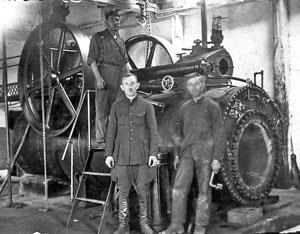 Not better the situation in the industry and the crafts giving means of livelihood of 5,7% of the population was at all. In the city there were several tens small industrial enterprises of semi-handicraft type, the total of workplaces did not exceed 400. The brick and flour-grinding enterprises were more considerable. I will in passing note that else in the 20th on the suburb of the city regularly several wind-driven generators swung wings. The craft was presented by two tens the most running professions, however continuous employment nobody could brag. Scanty earnings hardly allowed to make ends meet.
2,9% of kobrinets were engaged in trade. In the eleven-thousand city there were about 500 outlets of different caliber yes as much in a poveta. However, there were a few wholesale merchants - the overwhelming number was the share of retail and small trade. The city teemed with any speculators, dealers who were mercilessly gathering peasants. The seeming abundance of goods was explained by extremely low consumer ability of broad masses caused by a chronic economic crisis. Between shopkeepers the frenzied competition did not stop, cases of bankruptcy and suicides were even more often noted.
To complete the picture "the business world" needs to be added that in Kobrin there were several insurance companies, small private banks and loan cash desks. In the second half of the 30th there were ten cars, including three long-distance buses of places plied on 15-20. It is indicative that in order to avoid causing damage to the state railroads payment of travel by privately owned buses was higher, than by train. Passenger transport in the city was presented by hired droshkies, so-called carriers. Long-distance delivery of goods to small distances was carried out by jokers, i.e. the heavy covered vehicles which were slowly pulled by couple of horses.
Very characteristic data are provided in the mentioned edition about a condition of health care. One doctor had on 8782 (!) the inhabitant or on 277 sq.km. And one bed in paid hospital (3-5 zl. in days) served 2283 persons (for comparison: in east voivodeships 1 bed on 1211, whereas average figure over the country – 477). Mortality on ten thousand of the population made 134, including 33 percent of babies. koltun, malaria, tuberculosis and venereal diseases were the most widespread diseases. As fifteen practicing doctors lived only in the city where to reach from far away on a horse was difficult and visit to the doctor ran into money, a huge number of country people preferred to take advices of sorcerers and "grandmas". Only when the state of health worsened or surgical intervention was required, patients saw doctors to whom often nothing remained how to state hopelessness of a state.
The sanitary state not only villages, but also the cities left much to be desired. In the city there was one small public bath working occasionally. As for the county, baths were in Antopole and Divin. The only artesian well was on a city market square. In general, in the central part of Kobrin there was very little even mine wells. The water carriers carrying river water and raising for one bucket of 10 pennies were engaged in water supply of inhabitants here. It did not promote prosperity of personal hygiene. The fact that public health services closed eyes to a green moss which decorated the wooden barrels which were continuously rumbling on a cobblestone road surprises …
In 1921 in the house of the former Russian female pro-gymnasium on Suvorov St. (nowadays taken down, occupied district executive committee earlier) the Polish eight-cool gymnasium was open. We had it the first average educational institution and the only thing during that time in the county with the population of 115 thousand. The tuition fee was unreasonably high for people with modest prosperity therefore the number of pupils did not exceed 350-400 people. Besides a gymnasium in the city there was one semiletka and a so-called teacher's preparanda, preparatory two-cool school for receipt in teacher's seminary. There were religious Jewish schools. In the mid-thirties the commercial and vocational school with the small contingent of pupils opened.
As a significant amount of citizens remained illiterate and the printing word, including orders of the authorities, did not reach them, the position of the medieval herald who walked the peripheral streets and cried out in different local languages of the message on administrative resolutions, and at the same time that in some day the bath will work was restored or to be on sale meat on cheap stuff.
Incomparably worse the school situation in the village was. Again I provide official data of the Kobrin seymik. In the county 104 schools with 12 658 pupils were registered. 8,6 schools were the share of 10 thousand of the population, and one school served 36 sq.km of the territory. From total of schools with 1-3 years of training there were 89%. It is not necessary to be surprised that at such "education" there was very considerable percent of illiteracy what the statistics indicated. The area of 139 cool rooms made from 20 to 50 sq.m and only 44 over 50 sq.m. had. In the theory primary education was obligatory. Actually, despite fines, the mass of children was forced to leave study long before the end of academic year because it was necessary to graze cattle or to look after kids when parents worked in the field.
And in what conditions quite often it was necessary to work at a field of national education! It is confirmed by the desperate written address of one of teachers which is pertinent for quoting: "In 1926 the inspector charged to me to teach children in the morning before pasture of cattle on a pasture, and then disposed to learn all objects in the neighboring village where there was no teacher. Health at me weak, and it is necessary to work for two, not to fill up as I have to get up at half past two to begin occupations in the village for 1,5 km, and after that to go to the village on lessons. At the inspector's insistance I signed that I refuse a claim for compensation for additional work. My work took place in such conditions, as well as at many other teachers of the Polesia village. Classes were in close and dirty huts. Children sat on the earth or on blocks as benches were not. As there was no blackboard, wrote on doors, children wrote in notebooks, laying down on a floor. In some school rooms, in the winter at all of not aired, the whole master's family from 6 to 8 souls spent the night. Was not a surprise if during a lesson from under the furnace with a loud cackle chicken jumped out" …
In the county there were two agricultural schools – female in Plyanta, man's in Torokanyakh. Training term – 11 months, the total of pupils fluctuated from 48 to 62, i.e. will not call them mass. It is unlikely it is necessary to say that at all schools teaching was conducted in Polish alien to local population.
Books were published a little, small circulations and demand for them owing to high cost was small. Were expensive as well school textbooks. Private libraries met seldom. Also magazines, besides thanks to high prices were inaccessible to the reading public of the newspaper. Periodic literature could be bought in the only poor stall. As the price of one newspaper equaled costs of several eggs, inventive readers hired the newspaper for 5 pennies and after reading returned to the stallkeeper who lost nothing on similar operation. This phenomenon was widely adopted so and caused to publishing houses very significant damage so the last in turn undertook counter-measures, and newspapers began to be stitched by the special percussion caps preventing expansion without violation of integrity of sheets.
Meanwhile thirst for knowledge among progressive youth was uncontrollable. To earn funds for acquisition of desirable literature, the youth suited voskresniks (at that time it was read by reprehensible occupation) for collecting stones on fields which were on sale then to road department. Precious books were read usually collectively. In the evenings in more spacious hut tens which are eager to be illuminated gathered. For the lack of places on benches some were forced to take seat on the outspread casings just on a floor. The oil lamp which is dimly burning from a dead air lit a picture, worthy brushes of peredvizhniki!
According to official data, in Kobrin there were five paid public libraries: 1.) the Polish school malitsa with 1370 books and brochures and 308 readers; 2.) landowner club "Vozrozhdeniye" respectively 940 and 35; 3.) police commandant's office – 763 and 156; 4.) the Russian charitable society – 750 and 50; 5.) the Jewish society of Brenner – 140 and 175. Naturally, literature of these libraries could not satisfy all readers. Attempts to organize amateur libraries that was to the taste not to the mighty of this world became.
So, at city association of employees of labor unions there was a library made of the offered literature which all book fund was placed in one small case. Only in this library it was possible to meet some works of classics of Marxism-Leninism. With the purpose to discourage to use undesirable literature on this library raids of police which made lists of activists periodically were carried out and randomly confiscated even legal books.
Till 1932 in a number of villages, mainly in the North and the West of the county, there were offices of society "Prosvita" which had the small libraries. The theatrical circles operating at them occasionally put amateur theatricals.
Told should be added with a mention of Ebrami and Freydkis's two city movie theaters served by families of owners. Owing to weak attendance because of high cost of tickets sessions were given in certain days, and mainly the American movies in view of extremely limited release of the Polish movies were used. Needless to say, any kinoperedvizhek for rural areas was not.
In the form of a rare exception on screens the Soviet movies appeared. When the "Cheerful children" having huge success, on sessions orderly were shown, a crowd there arrived the rural youth which quite often walked more than ten kilometers. For some of them this pleasure came to an end with a deplorable surprise: at an exit from movie theater admirers of Bolshevist motion picture art had blows of police "guma". And in conclusion I will note that there were legal "people's houses" in Plyanta, Gorodtsa and Zhabinke which had no more than 100 sq.m. everyone.
A. Martynov
Martynov, And. The lost twentieth anniversary: history / A. Martynov//Kobrin-inform. – 2009. – On October 15, on December 10. – Page 6.
Navigation

Our partners
Communication with us
Help: +375(1642)22331
Accommodation: +375(1642)39371
Excursions: +375(29)2046305
Support: +375(29)8012472
Email: atlant_kobrin@tut.by
Email: admin@ikobrin.ru
Edition: to contact us
To advertisers


About our city
For tourists
Our projects: Tourist Kobrin | Intellectual Kobrin
All rights reserved © 2011-2015. All images are protected by their owners.
When copying materials the active reference to http://ikobrin.ru is obligatory.