


Witness of our history
Among extremely insignificant number some remarkable architectural ancient monuments which for centuries spared the uncountable fires regularly exterminating ancient Kobrin, the first place, undoubtedly, would belong to a peculiar building. The Spassky monastery which rises in a pride distance from a standard housing estate on st. on September 17 (we will in passing remember that initially this street was called Bazilianska, then Klyashtorny, i.e. monastic).
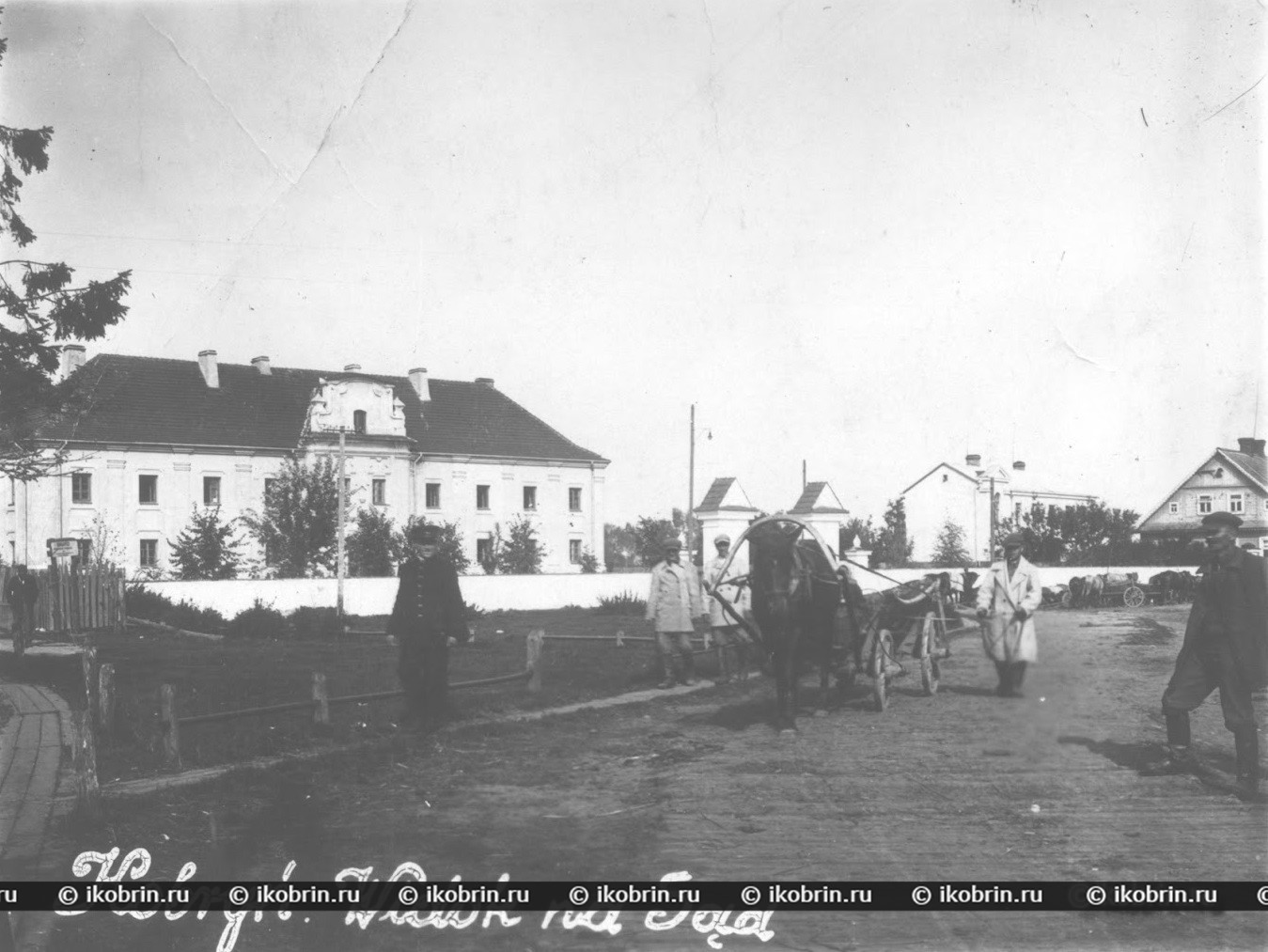
Spassky monastery in days of old
According to a written source, in 1497, i.e. 500 years ago, the last specific Kobrin prince Ivan Semyonovich put close long since the existing wooden church St. Saviour man's orthodox monastery. At the beginning of the 16th century the Spassky monastery had brick structures. One of them remained until now, povidimy, thanks to especially monumental laying of walls.
Due to the emergence in 1596. The Brest church union of the monastery the uniats who "turned" it in Baziliansky soon took control. This monastic order was founded in the fourth century by Saint Vasily, by name which the award received the name. Soon our monastery became a stronghold and the local distributor of new religion. It is known of the meetings of uniatsky hierarches which were taking place in its walls. Ivan Gogol who became subsequently the Pinsky uniatsky bishop was the last orthodox abbot shlyakhtich.

Spassky monastery in days of old
After cancellation of the union in 1839 the monastery was abolished, and in its buildings the spiritual school liquidated after the devastating "individual" fire in the second half of the past century was placed. The thrown ownerless brick box with the escaped extensive cellar next decades served as a reliable haven for the Kobrin bums who chose it. Among them a specific place was held by families of numerous Roma. In all the unattractiveness pathetic half-ruined walls are imprinted for posterity on the card published at the very beginning of our century. As for a number of auxiliary monastic structures, poshchazhyonny the fire, all of them were completely exterminated by wars of the twentieth century. Only in the mid-twenties the attention of local Polish administration was drawn by the collapsing walls with the birches which grew by them which did not decorate the city center at all. After long fluctuations it was solved having restored centuries-old walls for the subsequent placement in them povetovy court. Recovery work caused the next very essential re-planning of an interior. In particular, this time traces of the former temple which was once occupying the central part completely disappeared.

Ruins of the Kobrin monastery
According to the old resident with the neighboring Belorusskaya Street Chekhomov, during repair in rather escaped basement compartment traces of burials of allegedly Kobrin princes were found. According to the bossy order this find was carefully immured. Besides. In the thickness of external walls opened a number of niches with the semi-decayed human skeletons chained in handcuffs. Who and when from the mighty of this world dealt shortly thus with the foes, as they say, it will be forever covered with an uncertainty gloom. Chekhomov who was during that time the inquisitive fellow claimed that he saw all this "with own eyes".
Subsequently in courtrooms almost annually there were loud political processes, over members of underground KPZB. Especially wide resonance not only in Poland, but also it is far beyond its limits, caused a meeting of the court-martial considering case of so-called "Novosyolkovsky revolt" in 1933. Over the main defendants real threat of "tower" hung. In the yard of prison the gallows was beforehand prepared and the executioner is invited. However finally the government did not decide to apply the highest measure. And at the very beginning of Kobrin's occupation in June, 1941 at ancient walls Hitlerites would shoot. underground worker of KPZB Katya Gasilevich. She happened to head the long chain of the victims of Hitlerite terror in Kobrin district.
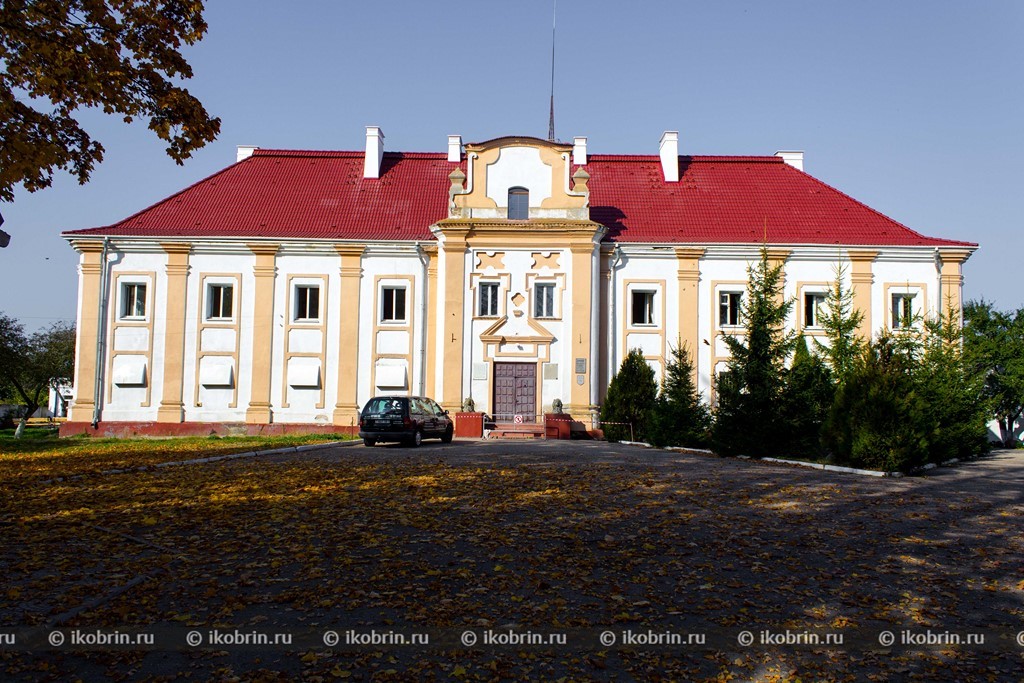
Spassky monastery today
And the last. The marble memorial board reminding of the capitulation of the fourthousandth group entering the seventh case of Napoleonic army which took place here is placed in 150-year anniversary of Patriotic war of 1812 by an entrance to the building. After the eight-hour hardened fight in captivity 2382 soldiers, 76 officers and 2 generals gave up. Winners got four a banner and eight guns. Two of these banners are at M. I. Kutuzov's grave in Kazan Cathedral of St. Petersburg. It was the first considerable victory in that campaign in which commemoration from walls of the Peter and Paul Fortress the first artillery salute was given.
In the monastery territory long since there were two fish ponds. According to the national legend, for a long time after fight found the various weapon in them. Apparently, many of the capitulating fighters preferred to say goodbye to it thus instead of humiliating delivery to winners.
It was claimed also that in World War I of the power disposed in case of the compelled retreat not to leave to the enemy church bells at all. As in August, 1915 in due time it was not succeeded to evacuate bells of the next cathedral, they were drowned in one of these ponds. And on "plug" as once used to say "tuteyshy", one more strange occurence of a mystical order so fashionable today to some extent able to be related to a case in point. It was witnessed by people, soberminded, not drinking and far from any mysticism.
There was this in the remote thirtieth years when story-tellers were young men. In stuffy summer evening both friends sat on a towing-path opposite to the monastery and selflessly played music for own delight on string instruments. The sun sat down. Superheated air stood in languor. Suddenly over the next thickets of reed the causeless whirlwind sweeping thickets extensively forming a funnel twirled. Following then from so suddenly calmed down funnel a certain similarity of a long human figure in a dark attire with the head shrouded in a hood began to rise slowly. Having been late several moments over the calmed-down thicket, the figure began to fall to water smoothly.
The grown dumb witnesses of this show silently looked at each other, slowly recovering. The first words of everyone after long confusion were: You saw?.
A. Martynov
Photo from archive of the website: ikobrin.ru
Martynov, A. Svidetel of our history / A. Martynov//Kobrynsk_ vesn_k. – 1997. – 12 krasav_k. – Page 2. Spassky monastery.
Navigation

Our partners
Communication with us
Help: +375(1642)22331
Accommodation: +375(1642)39371
Excursions: +375(29)2046305
Support: +375(29)8012472
Email: atlant_kobrin@tut.by
Email: admin@ikobrin.ru
Edition: to contact us
To advertisers


About our city
For tourists
Our projects: Tourist Kobrin | Intellectual Kobrin
All rights reserved © 2011-2015. All images are protected by their owners.
When copying materials the active reference to http://ikobrin.ru is obligatory.