


Walk on Pervomayskaya Street
(By Day of the street on May 8, 1988)
Unlike other Kobrin streets which names changed repeatedly May Day within centuries was Pinska, rather short time (at the Polish administration) it was the street on May 3 and only since 1939 received the present name.
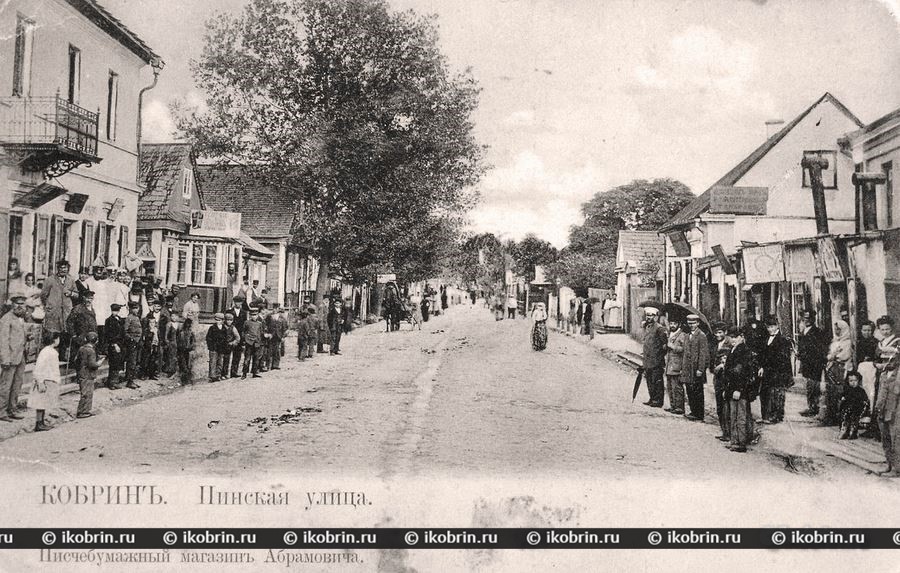
As for a written mention, it for the first time meets in the middle of the 16th century when the queen Bona owning during that time Kobrin ordered to allocate a site under building on Pinskaya Street to the court jeweler to "neapolitanchik" (the resident of Naples). We meet more detailed data in "Audit of Kobrin economy" of 1563. We learn from this document that on our street there were 78 construction sites, from them 25 the belonging plebaniya (Catholic clergy). Here will mention the house of the abbot of the orthodox monastery. Apparently, this street was the center of the Jewish colony not numerous at that time which possessed 18 households.
In the fifties the 20th centuries in connection with earthwork the street was dug over right at the beginning. At the same time at a depth of two meters the remains of an ancient timbered pavement were found. Inquisitive navvies in passing established that they under the top layer of logs were available further (we will remember in passing that in Novgorod about twenty stratifications of similar pavements are revealed). It is only necessary to regret that purposeful excavation in Kobrin was never carried out.
As for the fires frequent in ancient times, Pinskaya Street was not an exception and completely burned out in 1812. The last memorable devastating fire arose in the summer of 1905 in connection with disorders among the substitute soldiers sent to Manchuria. Scales of the fire and the suffered damage are confirmed by the official address about the help to fire victims of Pinskaya Street printed in one of the popular magazines to "Field". So, after necessary historical introduction we will go to a way, paying attention to the places and houses connected with some people or events.
At a view of the house No. 3 it is remembered that in it till 1939 the drapery belonging to Sanin who studied at the Berlin university was located. In 1941 one of the German military commandants studying together with Sanin enlisted him the translator. Having used the presented opportunity, when dismantling the Soviet documents Sanin began to destroy the papers compromising many fellow citizens. Grabbed in the act, he was immediately shot.
The house of the former communication belonged till 1915 to military presence (military registration and enlistment office). And in the following behind it the house in the yard there were barracks of convoy team which problems included protection of prison and a convoy of arrested into the Grodno provincial prison. The cable column opposite to this house is connected with events of recent history. I will dawn 1943 the underground worker Tadeush Gorbatovsky entering into diversionary anti-fascist group tried to blow up this column, important for the German communication, strengthened on two rails by means of a magnetic mine. Though one rail was killed by explosion, the column was safe on the second rail. Soon underground workers were given by the provoker, and on the eve of 1944 Gorbatovsky with companions were hung up.
Let's continue our campaign. Let's remember that up to the 60th years the bridge through Kobrinka was wooden and repeatedly burned down, and at that time a memorable high water in the spring of 1958 when its surface within a week stood under water, slightly it was not demolished by the cleared-up elements at all.
Three small hotels vegetated in three adjacent houses near Kobrinka (11-12-13) till 1939. After war in one of them (No. 15) the Kobrin Executive Committee of the City Soviet of People's Deputies was placed. In 1942 the wooden house (No. 11) was occupied by a Hitlerite ofitseriya. The explosive put by the guerrilla's hand in a base opening ruined a facade of the house and created panic among fascists among whom there were many victims.
The present movie theater "on September 17 earlier was called by last name the owner of "Ebram's cinema". In August, 1944 in this building there was a front meeting to participation of the marshal K.K. Rokossovsky. And here a little obliquely through the street (No. 30) in the years of occupation there was a police station damaged by the guerrilla mine enclosed to the police officers connected with local guerrillas.
Can cause bewilderment in our exacting contemporaries that in pretty modest wooden house till 1939 there was the most "luxurious" restaurant of the lady in the city Karpinskaya. The one-storeyed house (No. 32) which was originally serving as the Jewish hospital is connected with one of the most tragic events of history of Kobrin. In 1941-1942 this house was occupied by the central administrative management of the Jewish ghetto, so-called "юденрат".
I believe that the message that up to 1939 this house belonged to club of landowners of "Odrodzenye" will be surprising to employees of a dermatovenereal clinic. Here balls with a plentiful libation were given. The following object of our review it is necessary to call a structure of the former Jewish synagogue built in the first half of the 19th century on the suburb of Pinskaya Street of that time.
And in an ordinary-looking wooden lodge (No. 67) there was a handicraft workshop on production of tissue sleeves which is officially called by "factory of sleeves" with 6-8 workers in due time. Weak-sighted a house (No. 71) living the last months of the existence it is connected with destiny of the underground activist of KPZB Katya Gasilevich. During the belopolsky period she was a prisoner of a concentration camp of Kartuz-Bereza. In a prewartime headed the next children's home and it was shot by Hitlerites at walls of present militia in the first days of war.
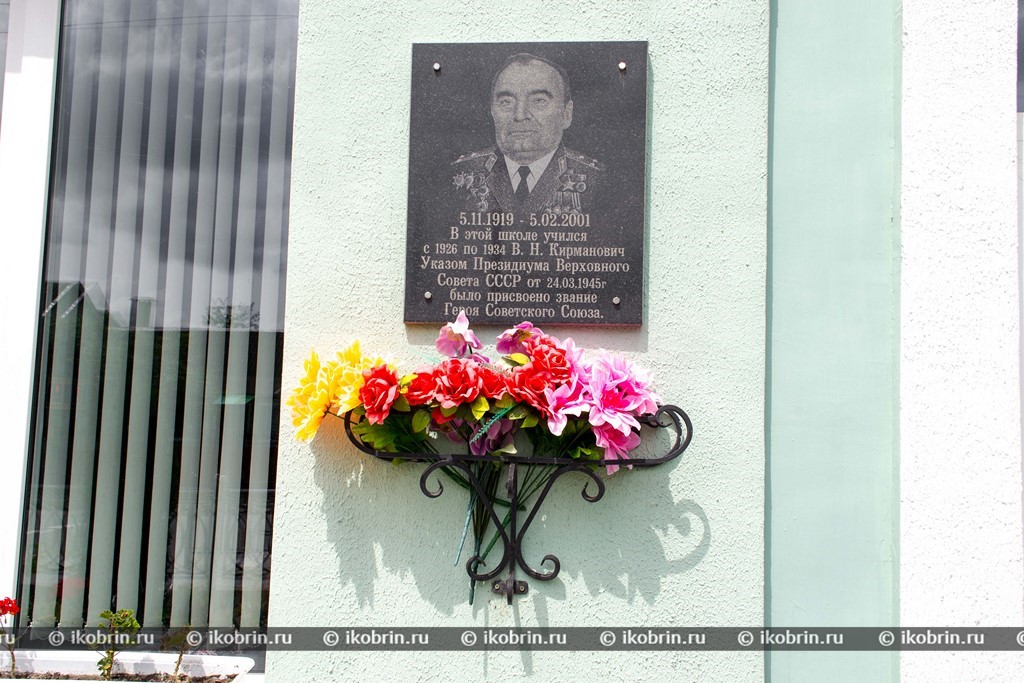
The Catholic monks who organized the children's home serving to the purposes of an opolyachivaniye of children for local orphans located in the house No. 85 till 1939. There was a joiner's workshop in which future Hero of the Soviet Union V. N. Kirmanovich studied. On the place of present athletic field СШ№2 there was an ancient Jewish cemetery, long ago abolished earlier. In the years of fascist occupation at school the squadron of the horse gendarmerie intended for fight against guerrillas was placed. And on the thrown cemetery big stables were built. The local farmer Alexey Nikonovich Kuresha, guerrilla coherent, contracted to take out manure from stables, and poisoned over 70 horses then went to guerrilla group of Chapayev.
The square on the opposite side of the street arose in post-war years. Before war there was a floor space intended for sale of firewood, hay, straw, a stroyles here. And in one of houses at the corner of the square (No. 60) till 1939 there lived the Catholic nuns of an urshulyanka who organized a kindergarten for education of kids in clerical and nationalist spirit.
In the fifties on the place of the former torzhishch the square to which the name of the commander of the 22nd tank division of the major general V.P. Puganov who was killed in battle near Kobrin on June 23, 1941 is appropriated is put. Here it is buried.
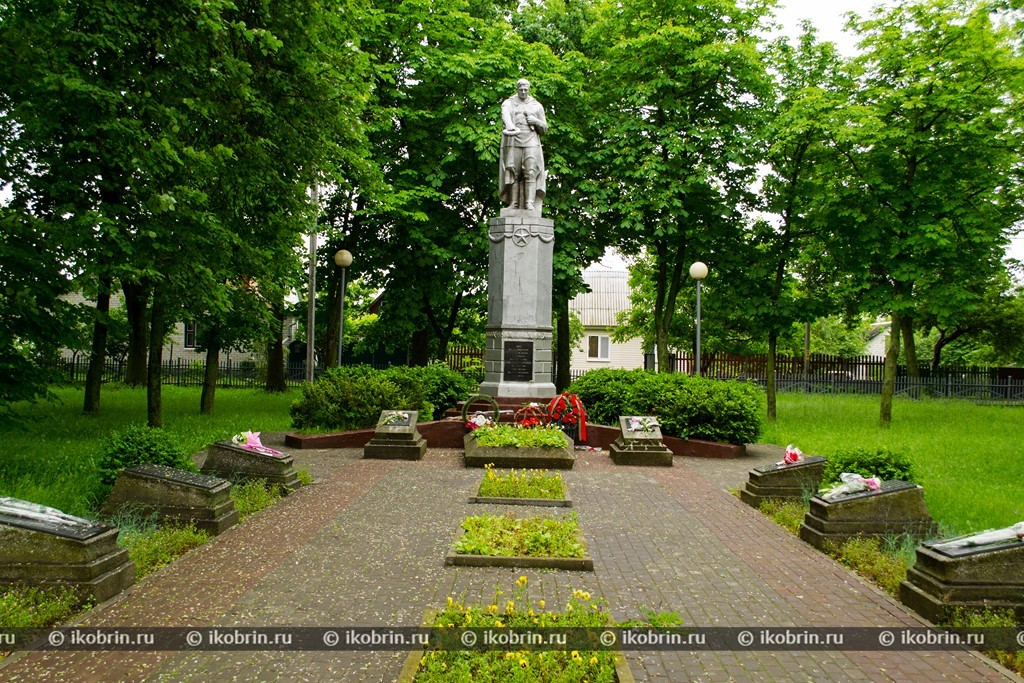
Nearby there is a tomb of the Hero of the Soviet Union A.I. Morozov who was killed in battle for Kobrin's release in July, 1944. In the center of the square on a mass grave of the Soviet soldiers freeing our city the monument with the soldier's figure is built. On marble slabs names of the dead are listed.
The building SSh№2 was under construction for a number of years and accustomed since 1936. The memorial board reminds of the pupil of school – the Hero of the Soviet Union V. N. Kirmanovich.
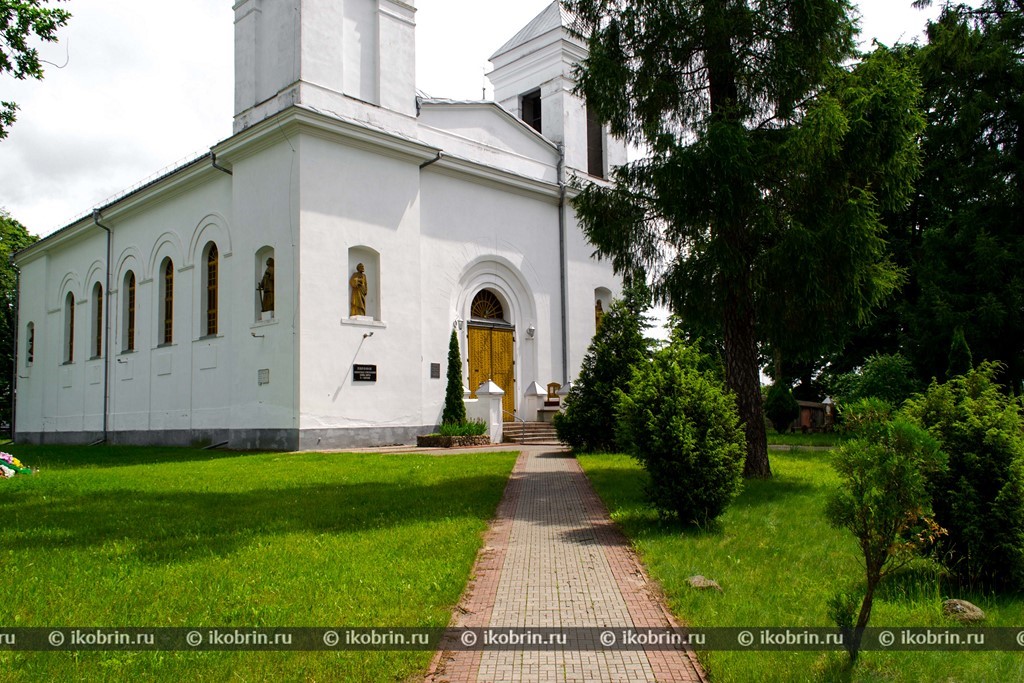
In the forties the 19th centuries on the waste ground at the end of the street the Catholic church which became a stronghold of clericalism and chauvinism in 1920-1939 is constructed. Work of hundreds of serfs oppressed by lawlessness is enclosed in the building of a church and brick wall.
On the opposite side of the street in the modest wooden house at No. 103 where now a kindergarten No. 3, till 1910 the men's parish school subsequently moved to one of buildings of a school complex at СШ№2 was placed. At the corner of Krasnogvardeyskaya Street where now workshops of the construction organization in 1944 the prisoner-of-war camp of Italians was placed.
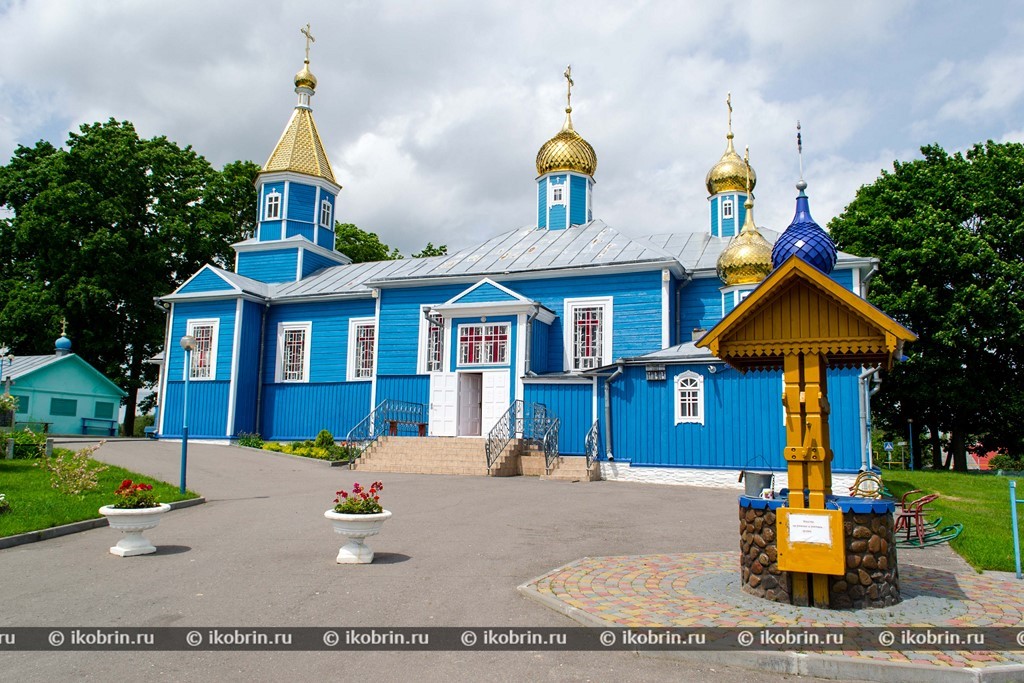
More interesting story at the long house (No. 109) located opposite to Krasnogvardeyskaya Street. Originally the structure was occupied by so-called almshouse. In September, 1939 the barracks of the Red guard created for maintenance of an order and protection of public property in vague transitional the period and up to emergence of regular militia located here. On long ago the closed city cemetery in 1912 the ancient Peter and Paul church existing "in Kobryni on was transferred from the downtown fence" already from the middle of the 15th century. On its former place in the downtown the Recreation center is built subsequently.
At the very end of former Pinskaya Street where ranks of garages were nowadays stretched, till 1939 in each 10-20-30 numbers of every month the extensive bestial fair on which skototorgovets from Warsaw and other remote places gathered was developed. Business in oxen, cows, horses and especially pigs was done.
And on the site which is nowadays occupied gortopy till 1915 huge military food warehouses rose. The reminder on them remained in the form of the escaped brick guard box. On the opposite side of the highway still in the mid-twenties there was a sandy height on which the windmill loomed.
In conclusion of our prolonged walk it is necessary to remember that the highway connecting Kobrin with Pinsk (128 kilometers) was under construction almost 15 years. And the Dnepro-Bugsky channel merged the waters with Mukhavts in these parts only in 1940.
08.05.1988.
Navigation

Our partners
Communication with us
Help: +375(1642)22331
Accommodation: +375(1642)39371
Excursions: +375(29)2046305
Support: +375(29)8012472
Email: atlant_kobrin@tut.by
Email: admin@ikobrin.ru
Edition: to contact us
To advertisers


About our city
For tourists
Our projects: Tourist Kobrin | Intellectual Kobrin
All rights reserved © 2011-2015. All images are protected by their owners.
When copying materials the active reference to http://ikobrin.ru is obligatory.