


And again about the tragedy of 1939
We publish the new facts about crimes against the Polish citizens in the territory of the Western Belarus. And again about the tragedy of 1939.
 The material "Podzemenye — the Belarusian Katyn" caused a great interest in readers of "The historical truth". Such tragic places across all Western Belarus hundreds. The people intoxicated with anarchy and felt impunity with red bandages vented all the rage on the Polish military personnel, police officers and civilians.
Then, in the middle of September, 1939, the Polish state infrastructure was destroyed. The country was on a death side. And in this any situation turncoats, having hidden behind a mask of ideological fighters against "a pansky yoke", created the terrible affairs.
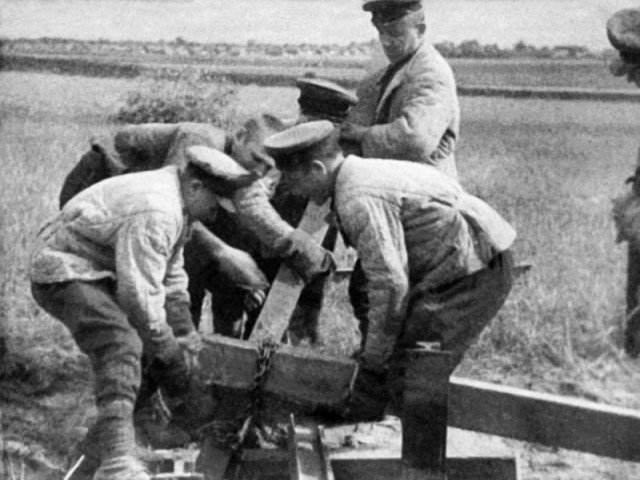
The Soviet frontier guards dismantle the Polish strengthenings
In Kobrin district there is a small village Bukhovichi. Now it is almost Kobrin's suburb. In September the 1939th through this settlement there passed the receding parts of Army Polish, several days defending the city from the German troops.
On September 17, 1939 the Red army crossed the Soviet-Polish border and a prompt throw moved on the West. In these conditions further defense of Kobrin was senseless and the Polish divisions began to depart.
In Bukhovichakh, in one of folvarok officers (on memoirs of their eyewitnesses there was a person six) a 83-infantry regiment of Army Polish stopped. Next day "staff officers" as they were called by locals, saw the Soviet tanks and Red Army men on the road. Poles went towards "guests from the East", but they were intercepted by the local "activists" who fastened red bandages on sleeves and demanded from Poles to hand over the weapon and to take off a uniform and when those refused to obey, ruthlessly killed them.
Brothers Sergey and Alexey Matveychuki became involuntary witnesses of a rough handling. They grazed cows and, having heard human shouts and groans, having hidden in bushes watched the occurring horror.
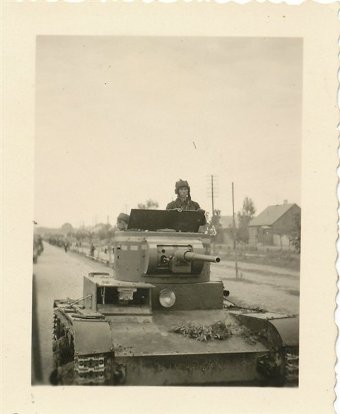
The Soviet T-26 tank in Brest
Having taken off a uniform and footwear from the killed, "activists" pushed off bodies of the Polish officers in a roadside ditch. Sergey Matveychuk remembered that some of Poles still groaned within several hours. Only towards evening to the place of punishment countrymen came, dug out a hole and somehow buried unfortunate.
And local morons, having dressed the Polish officer uniforms (on one of which there were many different awards), began to sport on the village, telling about how they "destroyed an officer gang".
Among activists there were two brothers – Philip and Sergey Mikhalyuki. The destiny of these, if one may say so, of people, deserves separate attention. Philip during "the first Councils" did not win special fame. In chairmen it was not beaten out and it in fight against "a pansky yoke" the new power did not estimate "merit".
And when Germans came Philip at once registered in police. Residents of the village Bukhovichi remember how the "newly made" police officer sported in the German uniform and told how it bravo protects the Jewish ghetto.
After liberation of Belarus from fascist aggressors Mikhalyuk disappeared in the woods, but was caught and condemned for 20 years of camps. In the 1953rd, under amnesty it was released and returned to the native land. However, soon became an inveterate drunkard and died. Probably it was a shame to people to look in the face.
And Sergey Mikhalyuk has a biography rather entertaining. Witnesses remember how this person personally pulled together boots from the dying Polish officers, and then bragged in the village of "new thing". However, long it was not necessary to resemble in "ofitserka" (the footwear of officers so is called).
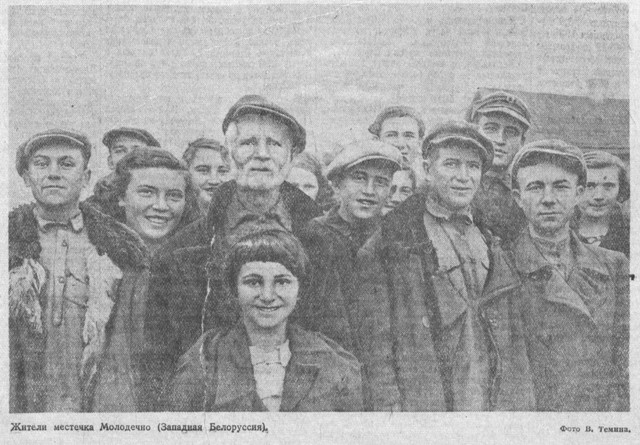
Molodechno's inhabitants. A photo from the Pravda newspaper
In 1940 S. Mikhalyuka arrests People's Commissariat for Internal Affairs. It turned out that this person passed in papers of the Polish police as … the informer. The court sentenced S. Mikhalyuk to exile to GULAG. And probably this informer murderer in camp in the Komi ASSR would disappear if not attack of Fascist Germany on the Soviet Union.
Soon according to the agreement Sikorsky-Maysky in the USSR the Polish army under command of the general Vladislav Anders began to be formed. From the Soviet camps of pull out steel of the former Polish citizens who passed through all torments of Stalin repressive system. Among other of GULAG also "agent" of the Polish police, and in combination and "the communistic activist" from Bukhovichey Sergey Mikhalyuk was released.
… In the 1960th years relatives of this person began to receive suddenly letters from Great Britain from George Michelson. It turned out that in 1946 Mikhalyuk did not want to come back to BSSR and decided to settle in Great Britain, replaced a name and became the respectable citizen of Her Majesty of the queen. Then in letters to the family it in paints described the service in the years of World War II. But in the homeland of this person remembered as the participant of the gang which killed innocent people.

September of the 1939th. The red Army enters Volkovysk
… The tragedy of 1939 still is not healing wound in heart of many Poles. But not others it and for Belarusians because all these lawless murders, exports, deportations happened on our earth and it is impossible to forget about it. Perhaps, each people will have "skeleton in the cupboard", but Europeans try to confess for fatal past mistakes. And all of us are at war with the history. We think out justification for brutal Stalin experiments with the and others people. It is already time to stop it and to learn to respect memory of the people who got to millstones of bolshevitsky terror.
Igor Melnikov, Nina Marchuk, Istoricheskaya Pravda newspaper 20.12.2012
Materials

Our partners
Communication with us
Help: +375(1642)22331
Accommodation: +375(1642)39371
Excursions: +375(29)2046305
Support: +375(29)8012472
Email: atlant_kobrin@tut.by
Email: admin@ikobrin.ru
Edition: to contact us
To advertisers


About our city
For tourists
Our projects: Tourist Kobrin | Intellectual Kobrin
All rights reserved © 2011-2015. All images are protected by their owners.
When copying materials the active reference to http://ikobrin.ru is obligatory.