


Politician and scientist Iosif Goshkevich
The Belarusian was the first Russian consul in Japan
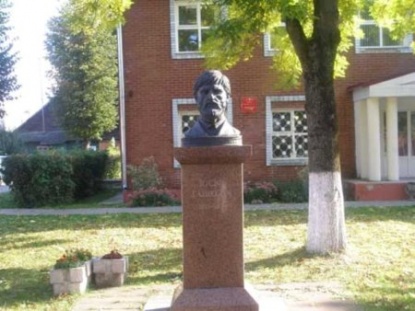 Iosif Antonovich Goshkevich was born (_os_f Gashkev_ch – is white.) in 1814 in the priest's family, in one of arrivals near Minsk. Future consul got primary education at parish school where his father was a teacher. Then there was a study in the Minsk theological seminary and in the St. Petersburg spiritual academy. Goshkevich had a rare ability to acquisition of languages. In one of documents on its education in particular it is noted that "in the presence of all officials of academy and the most notable persons of knowledge of Goshkevich of Greek were estimated as very good; the German, English and French languages – very good; compositions in the Russian and Latin languages as very good, the Jewish language – with outstanding progress".
Most likely, someone from "the most notable persons" considered potential in the boy, and recommended it to diplomatic service. Upon termination of academy I. Goshkevich as the priest comes to the Russian spiritual mission going to China where served exactly ten years.
In Beijing the native of Belarus added to knowledge of above-mentioned languages also knowledge of the Chinese, manzhursky, Korean, Mongolian and Japanese languages. Besides the main affairs (vicarial service), he was engaged in astronomical and meteorological supervision (reports sent to observatory in Pulkovo, near St. Petersburg).
After return from China I. Goshkevich publishes a large number of articles. As rare, for those times, expert on east languages, he is invited to service in the Ministry of Foreign Affairs the official on special instructions in Asian department and in two years sent the translator and the adviser to expedition to coast of Japan to a frigate "Pallada".
The conclusion of treaties of friendship and trade, and also the solution of a question of borders of Russia and Japan was a main goal of expedition to Japan. In those days Japan was a difficult interlocutor in diplomatic questions. Her governors protected the state from external contacts, being afraid of colonization. Though the conceiving Japanese understood that they will be able to keep the independence only in case seize achievements of the West.
In August, 1852 the ships of expedition dropped an anchor on raid of Nagasaki. Three long years went negotiations. And, at last, the first Russian-Japanese contract was signed on January 25, 1855. It was the beginning of the official interstate relations.
When expedition came back to Russia, there was already the Crimean war. The ship by which Goshkevich floated encountered in the Sea of Okhotsk English a military frigate. The Russian seamen were taken prisoner. Iosif Goshkevich, along with other seamen, was transported to Hong Kong – possession of Great Britain of that time. British especially were interested in the Russian translator. Goshkevich asked to prepare the report on China and work of the Russian spiritual mission in Beijing.
In two years to participants of expedition allowed to return home. In 1857 in St. Petersburg I. Goshkevich published the Japanese-Russian dictionary. The book received the Demidovsky award.
At this time the imperial government is going to open the Russian consulate on Hakaido's island. Long discussions at the choice of the candidate for the consul's post, and in fact the first Russian ambassador in Japan in St. Petersburg were not. It appointed the native of Belarus - Iosif Goshkevich. In the fall of 1858 the newly made consul together with employees and their families arrived to the port Hakodate.
Together with I. Goshkevich to Japan there arrived also his spouse – Elizabeth Stepanovna with the stepson Vladimir. Russians were accepted kindly. But it was necessary to arrange with him the life. Everything began with construction of the building of consulate (remained up to now). Then Christ Christ Redeemer's church was constructed. Opened school and hospital. Published the first Russian alphabet for children. Trained Japanese in a seamanship and medicine.
In 1865 the first Russian consul in Japan I. Goshkevich returned to St. Petersburg. After a while for health reasons he resigned and went to the estate with the beautiful name "Mali", under Vilno (nowadays Ostrovetsky region of the Grodno region). There he also spent the last years of the life.
Iosif Goshkevich died on October 5, 1875. It is buried in the same place, in the village of Mali, on a local orthodox cemetery. Descendants do not forget the famous fellow countryman. On a tomb of the first Russian consul in Japan the beautiful monument is established.
Each two years pass scientific readings to which there come guests from Japan in Ostrovtsa. In Minsk in 1968 there was V. Guzanov's novel of "Odysseys from White Russia", about I. Goshkevich's life. By the way, in the Belarusian capital around Loshitsa there is a street called in honor of the famous fellow countryman.
Remember a name of the first consul and in Japan. In his honor the gulf in the Sea of Japan is called, and in the city of Hokadate near an Orthodox church of Christ Christ Redeemer the memorial bust is established to the first Russian consul, the native of Belarus Iosif Goshkevich.
Nina Marchuk, "Historical truth", 01.11.2012
Materials

Our partners
Communication with us
Help: +375(1642)22331
Accommodation: +375(1642)39371
Excursions: +375(29)2046305
Support: +375(29)8012472
Email: atlant_kobrin@tut.by
Email: admin@ikobrin.ru
Edition: to contact us
To advertisers


About our city
For tourists
Our projects: Tourist Kobrin | Intellectual Kobrin
All rights reserved © 2011-2015. All images are protected by their owners.
When copying materials the active reference to http://ikobrin.ru is obligatory.